What to Eat in Georgia? 10 Dishes You Should Try on Your First Trip
Georgian food is one of the best reasons to visit the country.
It is generous, rich in flavour, full of herbs, walnuts, cheese, bread, spices and sauces — and it is made to be shared. In Georgia, food is rarely just something you order because you are hungry. It is part of the culture, part of hospitality and often the beginning of a conversation.
A Georgian table can look slightly chaotic at first: plates everywhere, bread on the side, herbs in the middle, someone passing sauce, someone pouring wine, someone insisting that you try “just one more thing”. But that is exactly the charm of it.
If you are travelling to Georgia for the first time, here are ten dishes and flavours you should not miss.
1. Khachapuri — Georgian cheese bread
Khachapuri is probably the most famous Georgian dish, and for a good reason. It is warm, filling, comforting and very hard not to like.
The simplest way to describe it is Georgian cheese bread, but that does not really do it justice. There are many regional versions of khachapuri, and each one has its own character.
The most famous one is Adjarian khachapuri, shaped like a boat and filled with cheese, butter and an egg yolk. You mix everything together while it is still hot and tear pieces of bread from the edges to dip into the filling.
There is also Imeretian khachapuri, round and filled with cheese inside, and Megruli khachapuri, which has cheese both inside and on top.
Khachapuri is not a light snack. It is a full commitment. But it is one of the first things you should try in Georgia.
2. Khinkali — Georgian dumplings
Khinkali are large Georgian dumplings, usually filled with meat and broth. They are juicy, aromatic and slightly dangerous if you try to eat them too quickly.
The proper way to eat khinkali is to hold them by the top, bite carefully into the side, drink the broth inside, and only then eat the rest. The twisted top is usually left on the plate.
Classic khinkali are filled with meat, but you can also find versions with mushrooms, cheese, potatoes or herbs. In mountain regions, khinkali are especially popular and often taste more rustic and intense.
One warning: khinkali are addictive. You may order five and then suddenly understand why people order ten.
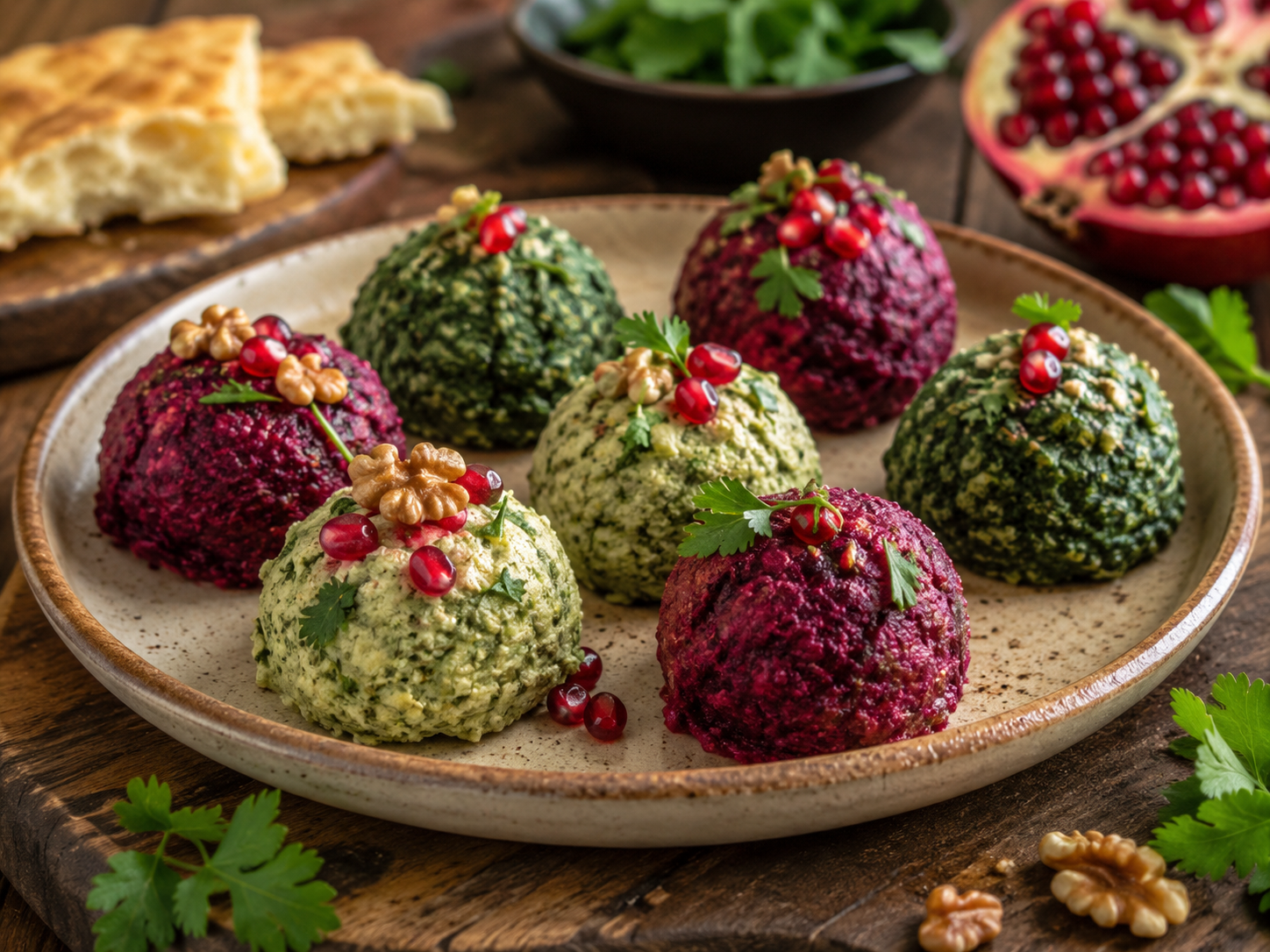
3. Pkhali — vegetables with walnuts and herbs
Pkhali is one of the best examples of how Georgian cuisine can make simple ingredients taste special.
It is usually made from vegetables mixed with ground walnuts, garlic, herbs and spices. You may find pkhali made from spinach, beetroot, cabbage, beans or other vegetables. It is often served in small portions and decorated with pomegranate seeds.
Pkhali is fresh, earthy, nutty and full of flavour. It is also a great choice if you want something lighter on a table that may otherwise be dominated by bread, cheese and meat.
For vegetarian travellers, pkhali is a very good friend.
4. Badrijani nigvzit — eggplant with walnut paste
This is one of the most elegant and beloved Georgian starters.
Thin slices of fried eggplant are filled with a rich walnut and garlic paste, then rolled and often decorated with pomegranate seeds. The result is soft, creamy, slightly smoky and deeply aromatic.
Badrijani nigvzit is a dish that almost always disappears quickly from the table. It is simple, beautiful and very Georgian in its use of walnuts, garlic and herbs.
If you are trying Georgian food for the first time, order it. There is a very good chance you will order it again the next day.
5. Lobio — beans, but much better than you expect
Lobio is a traditional Georgian bean dish, usually made with red beans, herbs, onions, spices and sometimes walnuts. It is often served in a clay pot, warm and comforting.
Do not underestimate it because it sounds simple. Good lobio can be one of the most satisfying dishes on the table, especially when served with mchadi, Georgian cornbread, and pickled vegetables.
It is hearty, affordable and full of flavour. It is also a great dish for colder days, mountain trips or moments when you want something traditional but not too heavy.
6. Mtsvadi — Georgian grilled meat
Mtsvadi is Georgian grilled meat, often cooked over an open fire. It may look simple, but when done well, it is excellent.
The flavour comes from good meat, fire, salt, sometimes onions and the atmosphere around it. Mtsvadi is often eaten during family gatherings, outdoor meals and celebrations.
It is usually served with fresh herbs, onions, bread, sauces and, of course, wine. In Georgia, grilled meat is rarely just a plate of meat. It is part of a larger table and a larger mood.
If you enjoy barbecue-style food, mtsvadi should definitely be on your list.
7. Chakapuli — lamb or veal with tarragon and sour plum
Chakapuli is a traditional stew usually made with lamb or veal, fresh tarragon, white wine and sour green plums called tkemali.
It has a very distinctive flavour: herbal, sour, fresh and rich at the same time. It is especially associated with spring, when fresh herbs are everywhere and the dish feels perfectly seasonal.
For many visitors, chakapuli is a surprise because it does not taste like typical heavy stew. The tarragon and sour plums give it a bright, almost sharp character.
It is a wonderful dish to try if you want to go beyond the most famous Georgian classics.
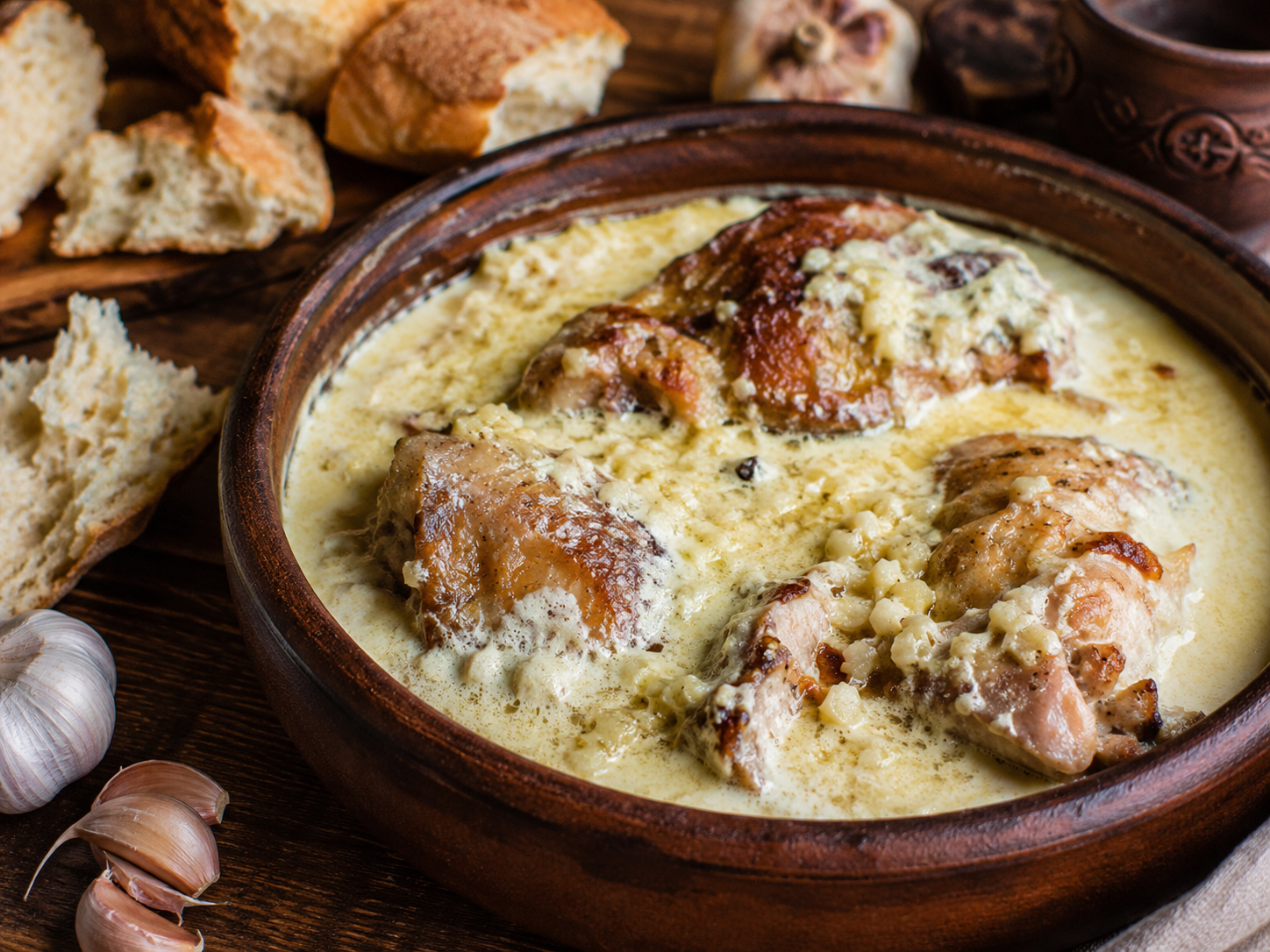
8. Shkmeruli — chicken in garlic milk sauce
Shkmeruli comes from the Racha region and is one of those dishes that proves Georgian food does not need many ingredients to be powerful.
It is chicken cooked in a rich garlic and milk sauce. The sauce is intense, creamy and very aromatic. It is usually served hot, often still bubbling, and should be eaten with bread to collect every last bit of the sauce.
This is not a dish for people who are afraid of garlic. But if you like strong flavours, shkmeruli can easily become one of your favourites.
9. Churchkhela — the Georgian “snickers”
Churchkhela is one of the most famous Georgian sweets. It is often called the Georgian snickers, although it is actually much older and much simpler.
It is made by threading walnuts or hazelnuts onto a string and dipping them into thickened grape juice. After drying, it becomes a chewy, sweet and nutritious snack.
You will see churchkhela hanging in markets, shops and roadside stalls. It comes in different colours depending on the grape juice used, and it is one of the most popular things to bring home from Georgia.
It is also a good snack for travel days — sweet, filling and easy to carry.
10. Georgian sauces and spices — the small things that change everything
Some of the best Georgian flavours are not separate dishes, but sauces, herbs and spices that appear again and again at the table.
Tkemali is a sour plum sauce served with meat, potatoes and many other dishes.
Ajika is a spicy paste made with peppers, garlic, herbs and spices.
Svan salt is an aromatic seasoning from the Svaneti region, usually made with salt, garlic and spices.
Fresh coriander, parsley, tarragon, basil and dill appear everywhere.
These flavours make Georgian cuisine instantly recognisable. They bring freshness, sharpness and depth to even the simplest dishes.
If you want to bring something small from Georgia, spices, Svan salt or ajika can be a very good idea.
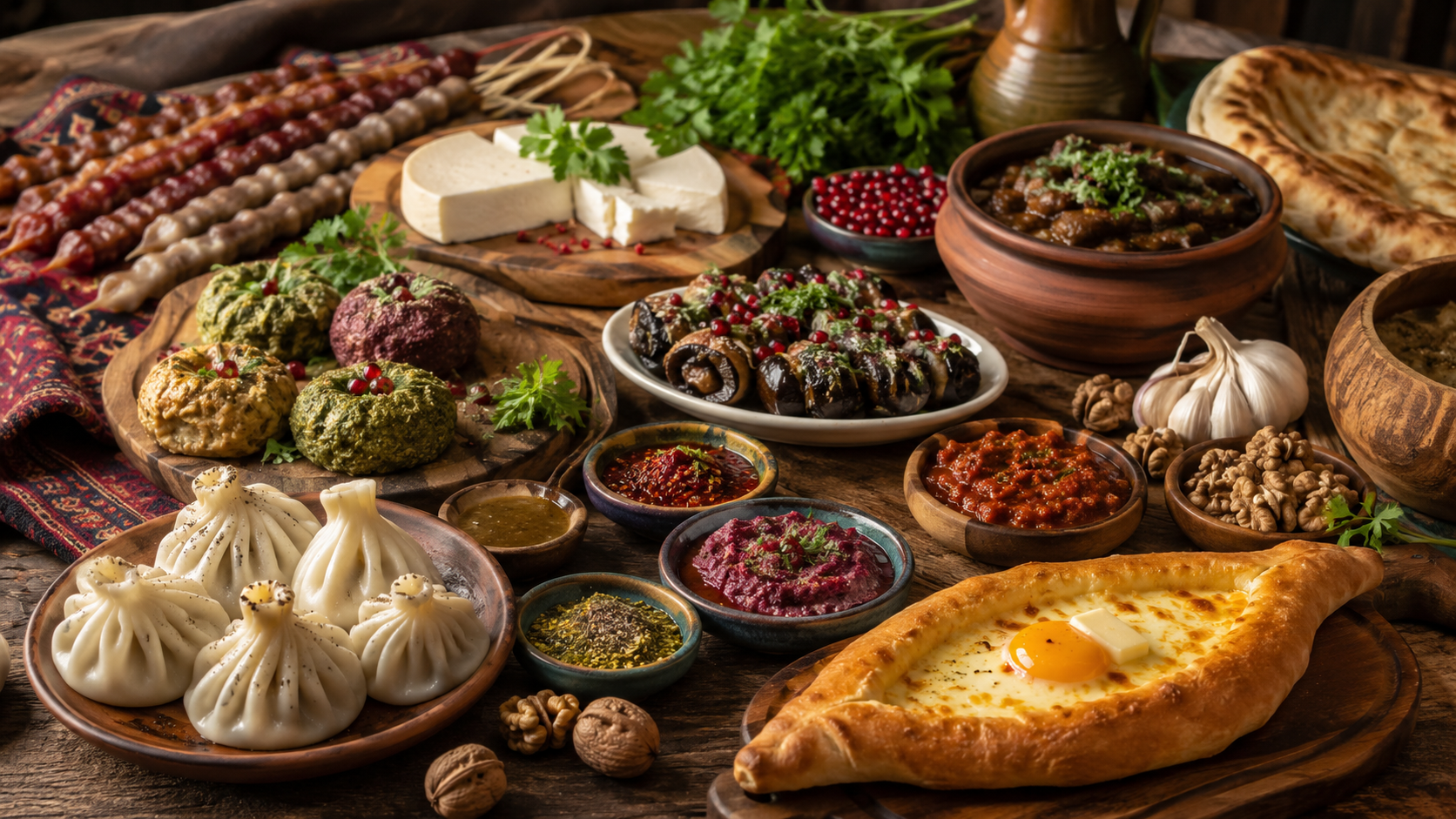
What should you order for your first Georgian meal?
If it is your first time in a Georgian restaurant, do not order only one main course per person. Georgian food works best when shared.
A good first table could include:
khachapuri,
khinkali,
badrijani nigvzit,
pkhali,
lobio,
mtsvadi,
tkemali or ajika,
fresh herbs,
and local wine or lemonade.
This will give you a good first impression of Georgian cuisine: bread, cheese, walnuts, herbs, meat, sauces, wine and the joy of sharing.
Is Georgian food good for vegetarians?
Yes, Georgian cuisine can be very friendly for vegetarians, especially compared with many other traditional cuisines.
There are many dishes based on beans, eggplant, spinach, mushrooms, potatoes, cheese, bread, walnuts and herbs. Pkhali, lobio, badrijani nigvzit, mushroom khinkali, cheese khachapuri, ajapsandali and many salads can all work very well.
Vegans may need to be more careful, especially because cheese, butter and eggs appear often, but there are still good options if you know what to order.
Georgian food is best with context
You can, of course, eat Georgian food by simply choosing names from a menu. But the experience becomes much better when you understand what is on the table and why it matters.
Why are walnuts used so often? What is the difference between types of khachapuri? How do you eat khinkali properly? Why is wine such an important part of the meal? What is the role of the toast? Why does a Georgian table often feel more like an event than a dinner?
These are the details that turn eating into part of the journey.
At Georgia Uncovered, we believe Georgian cuisine is not just something you try between sightseeing stops. It is one of the best ways to understand the country — its hospitality, regions, traditions and rhythm of life.
Because in Georgia, the table is never just a table.
It is where the story begins.