What Are Georgians Like? A First-Timer’s Guide to Georgian Hospitality
If you are planning your first trip to Georgia, you have probably already heard one sentence many times: Georgians are incredibly hospitable.
And yes — it is true. But Georgian hospitality is not just a nice tourist cliché. It is something much deeper, more emotional and more present in everyday life than many visitors expect.
In Georgia, a guest is not treated as a stranger who simply comes and goes. A guest is someone who should be welcomed, fed, included in conversation and made to feel part of the moment. Sometimes this can be beautiful. Sometimes it can be intense. And sometimes, especially if you are not used to it, it can be a little overwhelming.
So what are Georgians really like? What should you expect when visiting a Georgian home? And how can you feel comfortable in a culture where the table, the toast and the guest all matter so much?
Here is a simple guide for first-time visitors.
Georgians are famously hospitable — and they take it seriously
Hospitality in Georgia is not a performance prepared for tourists. It is part of the culture, family life and national identity.
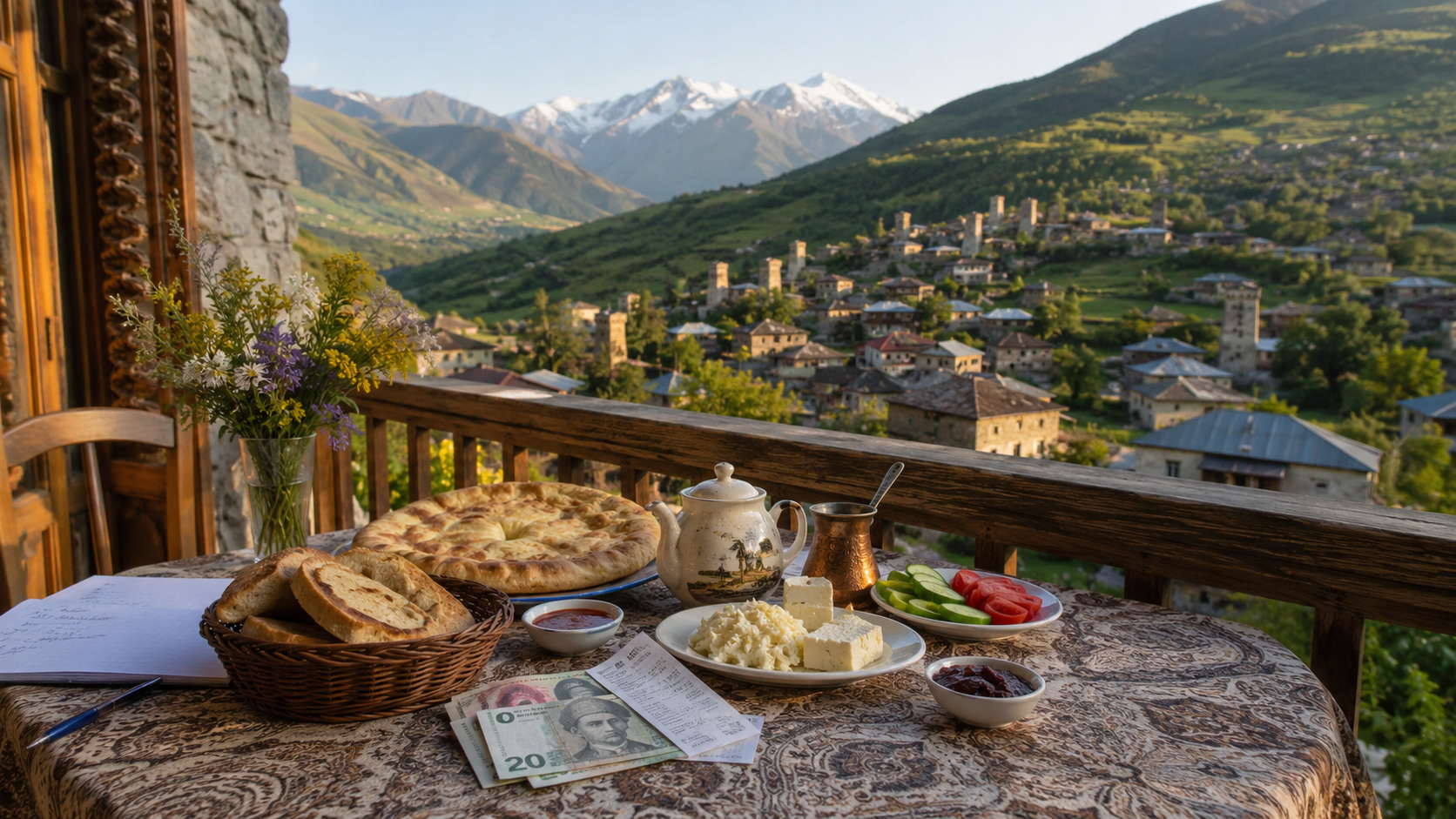
If you are invited into a Georgian home, there is a good chance that food will appear very quickly. Not just one plate. Usually many plates. Bread, cheese, vegetables, khachapuri, khinkali, meat, salads, sauces, homemade wine — and then something else, because the host will probably decide that you have not eaten enough.
For many Georgians, feeding a guest is a way of showing respect. It is not only about food. It is about care, generosity and pride in the home.
This can be surprising for travellers from countries where hospitality is more reserved. In Georgia, welcoming someone often means doing it fully — with time, energy, food, wine and emotion.
A Georgian home is rarely quiet
If you expect a calm, formal dinner where everyone speaks quietly and follows strict table rules, a Georgian home may surprise you.
Georgian gatherings are often lively. People talk, laugh, interrupt each other, tell stories, raise toasts, bring more food, move around the table and express themselves openly. The atmosphere can be loud, warm and full of energy.
This does not mean people are arguing. Georgian communication can simply be more direct and expressive than what some visitors are used to. A loud voice, strong gestures or emotional storytelling are often just part of the rhythm.
For many travellers, this becomes one of the most memorable parts of the journey: the feeling that life is not being hidden behind polite distance.
Family and tradition matter a lot
Family plays a very important role in Georgian life. Many social situations are built around relatives, neighbours, friends and guests. Celebrations are often family-centred, and important moments are shared at the table.
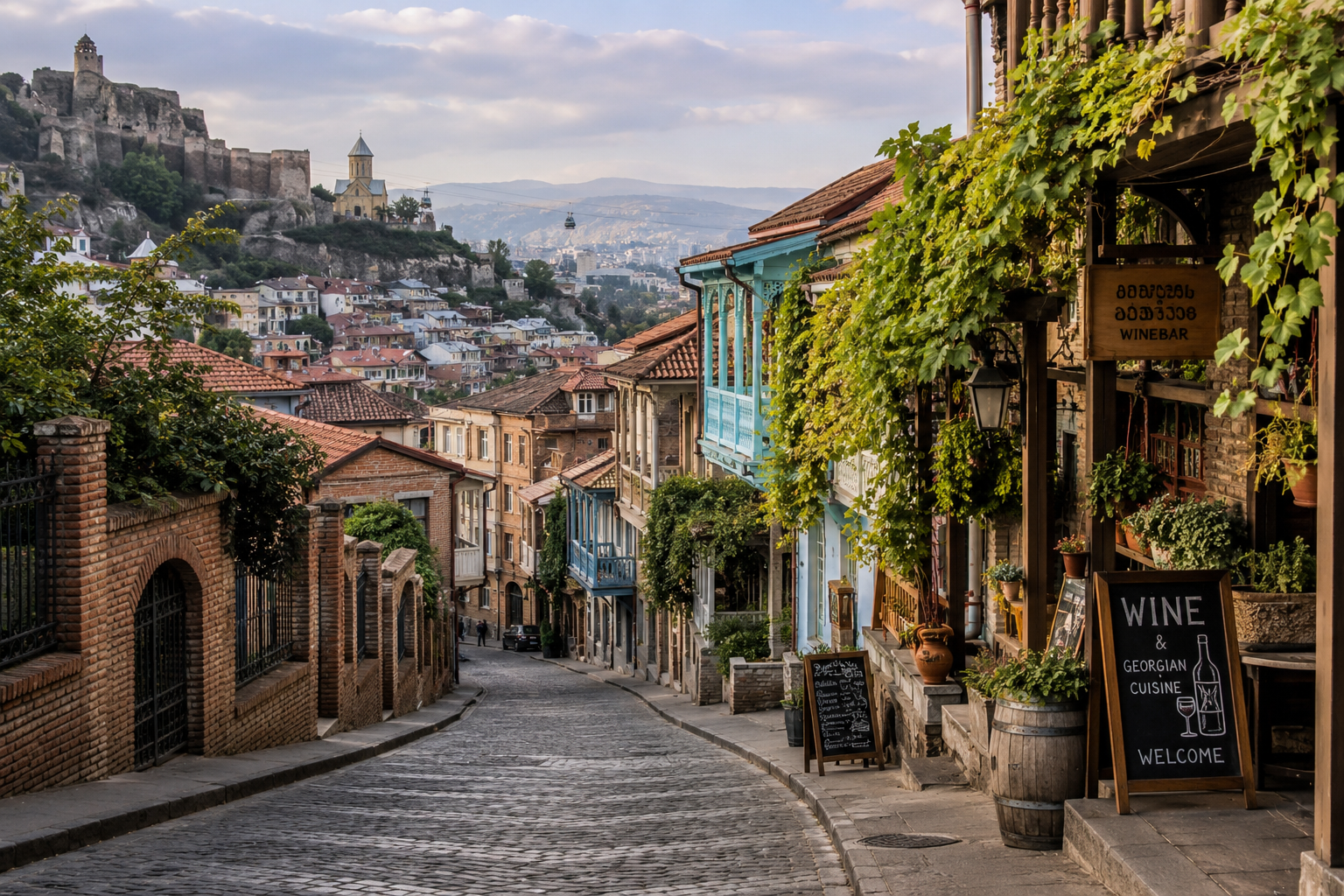
Tradition also has a strong place in Georgian culture. Religion, respect for elders, family ties, local customs, food and wine all create a sense of continuity. Even in modern Tbilisi, where life can feel very international, traditional values still shape many everyday situations.
This does not mean that every Georgian thinks the same way. Georgia is diverse, and younger generations often live very differently from their grandparents. But if you visit Georgian homes or travel outside the capital, you will quickly notice that family, hospitality and respect remain very important.
The supra is more than a meal
One of the most important Georgian traditions is the supra — a feast with food, wine and toasts.
For visitors, the supra can look like a long dinner. But for Georgians, it is much more than that. It is a ritual of connection. A place where people honour guests, remember loved ones, celebrate life, speak about friendship, family, faith, peace, love and the country itself.
At a traditional supra, there is often a tamada, the toastmaster. The tamada leads the toasts, sets the tone of the gathering and gives rhythm to the evening. Toasts in Georgia are not usually quick “cheers” before drinking. They can be long, poetic, emotional and surprisingly serious.
If you are invited to a supra, do not treat it like an ordinary dinner. It is one of the best ways to understand Georgian culture from the inside.
Do you have to drink a lot?
This is a very common question.
Georgia is strongly connected with wine, and wine often appears during gatherings. But this does not mean every visitor must drink heavily.
Traditionally, toasts are important, but a good host will understand if you do not drink much, cannot drink alcohol or simply prefer to take it slowly. The key is how you communicate it.
It is better to say politely from the beginning that you drink only a little, or that you are not drinking alcohol. Do it with a smile, without making a big drama out of it. Most people will respect that.
What can feel impolite is pushing the glass away, refusing everything sharply or acting as if the host’s wine is a problem. In Georgia, tone matters.
You do not need to drink a lot to enjoy Georgian hospitality. You do need to show respect for the moment.
What should you bring when visiting a Georgian home?
If you are invited to someone’s home, bringing a small gift is a nice gesture.
It does not have to be expensive. Something from your country or region is often appreciated: sweets, a small souvenir, good chocolate, a local product or something personal. The value is not in the price, but in the thought.
If there are children in the home, a small treat for them is also a kind gesture. Flowers may be appropriate in some situations, but if you are not sure, a simple edible gift is usually safe.
Georgians do not usually invite guests because they expect presents. But a small gift shows that you understand the importance of the invitation.
What should you avoid?
Georgians are usually warm and open, but there are a few things worth keeping in mind.
Avoid openly mocking Georgian traditions, religion, food or national pride. Georgians can be very proud of their country, and careless criticism may be taken personally.
Be careful with political topics, especially if you do not know the people well. Georgia has a complicated history and sensitive relationships with its neighbours. It is better to listen first than to speak too confidently.
Do not rush the table. In many Georgian homes, eating quickly and leaving immediately may feel cold or impolite. Time spent together is part of the hospitality.
Also, do not expect everything to be perfectly organised according to a strict schedule. Georgian social life can be spontaneous. Plans may change, guests may arrive unexpectedly, and dinner may last much longer than you thought.
Do Georgians like Polish travellers?
Polish travellers are generally welcomed warmly in Georgia. There is often a sense of sympathy, curiosity and cultural closeness. Many Georgians know that Poles are interested in Georgia, and Polish visitors often feel comfortable here because both cultures value family, food, faith, history and hospitality.
Of course, every person is different, and no country can be reduced to one simple rule. But many Polish travellers quickly notice that Georgia feels emotionally familiar in some ways — even when the language, alphabet and customs are very different.
That combination is one of the reasons why so many people from Poland return to Georgia more than once.
How to win Georgian hearts as a guest
You do not need to speak perfect Georgian to make a good impression. Even a few simple words can mean a lot.
Learning how to say gamarjoba — hello — or madloba — thank you — is already a beautiful start. Georgians appreciate when visitors make even a small effort with the language.
But beyond words, the most important thing is attitude.
Be open. Be curious. Taste the food. Listen to the stories. Accept that things may happen differently than planned. Compliment the host’s cooking. Ask questions. Smile. Do not be afraid of the warmth.
Georgian hospitality is easiest to understand when you stop treating it as something exotic and start receiving it as a real human gesture.
Georgia is best understood through people
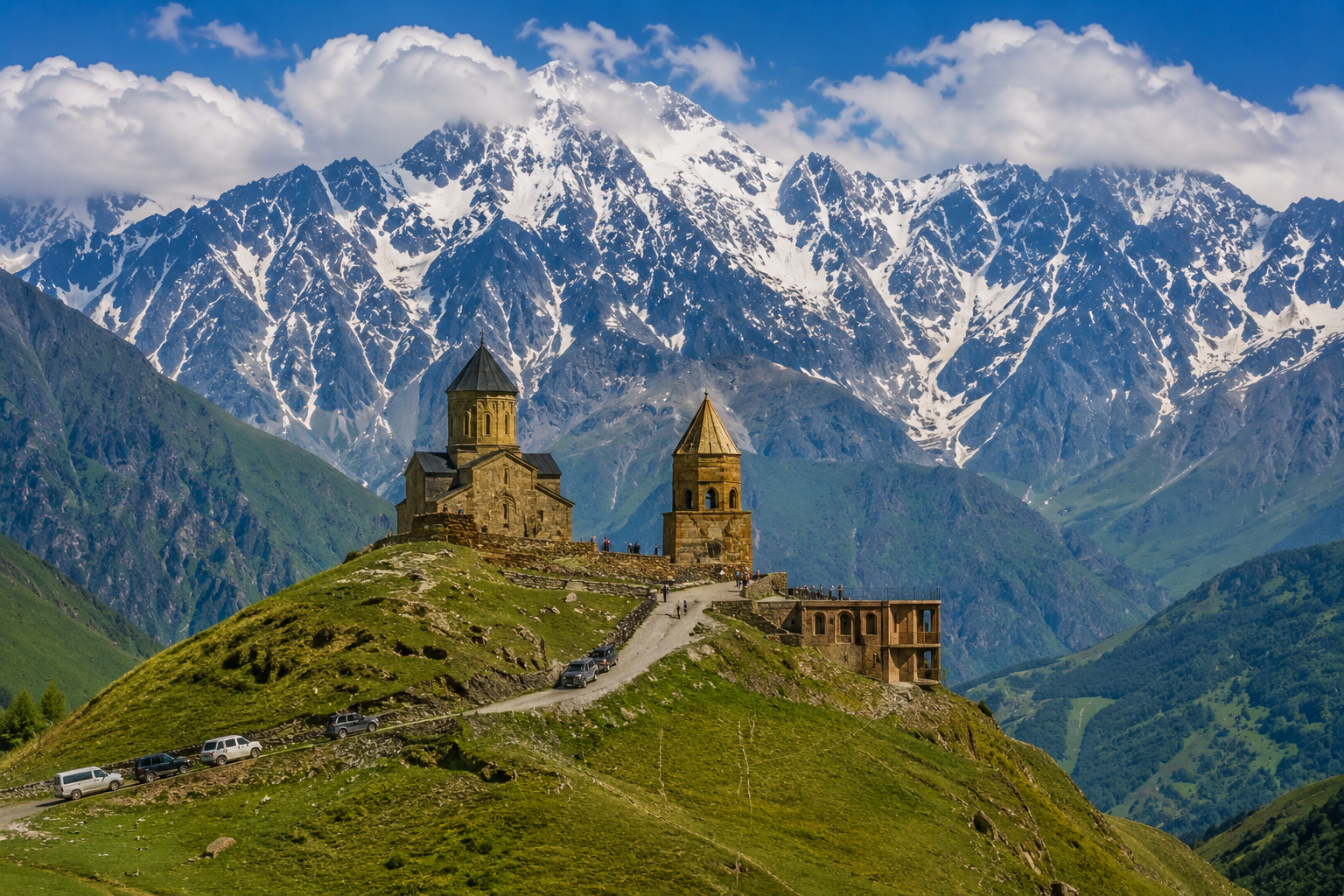
Mountains, monasteries, wine and food are all important parts of a journey through Georgia. But very often, what visitors remember most is not a viewpoint or a monument.
It is a person.
A driver who told a story on a mountain road. A host who insisted you try one more dish. A winemaker who spoke about qvevri as if speaking about family. A woman at the market who added an extra handful of herbs to your bag. A family that made you feel welcome even without a shared language.
This is why travelling in Georgia with local context matters so much. The country is beautiful on the surface, but it becomes much more interesting when you understand the people, the gestures and the meaning behind them.
At Georgia Uncovered, we believe that a good journey through Georgia is not only about where you go. It is also about who you meet, what you taste, what you hear and what you begin to understand along the way.
Because in Georgia, hospitality is not an attraction.
It is part of the story.